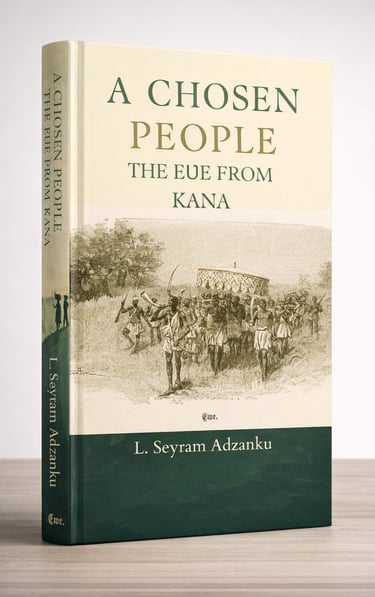
About The Book
Across West Africa, the Eʋe have preserved oral traditions, cultural practices, naming systems, and linguistic patterns that speak of an ancient past far older than colonial records. This book explores the compelling claim long held in Eʋe oral history, that the Eʋe are not merely a West African ethnic group, but a people whose origins and identity are inseparably linked to the ancient Israelites.
Drawing from oral traditions, comparative linguistics, Biblical texts, ethnography, and historical sources, this work examines striking parallels between Eʋe culture and the Hebrew world by reexamining: covenantal concepts, naming practices, sacred objects, migration narratives, ritual purity laws, and theological ideas surrounding the Most High God. Particular attention is given to Eʋe language structures and meanings that illuminate Biblical names, places, and concepts in ways often overlooked by Western scholarship.
Rather than presenting identity as a modern invention or ideological assertion, this book treats Eʋe-Israelite consciousness as a living cultural memory preserved through story, symbol, and practice, even in the absence of written records. It challenges dominant historical narratives, raises critical questions, and invites readers to reconsider Africa’s place in the Biblical and ancient world.
Eye-opening insights that bring history alive.
Awusi K.
"